
How to reduce appointment no-shows
Write clear confirmations, time reminders well, and handle repeat no-shows.
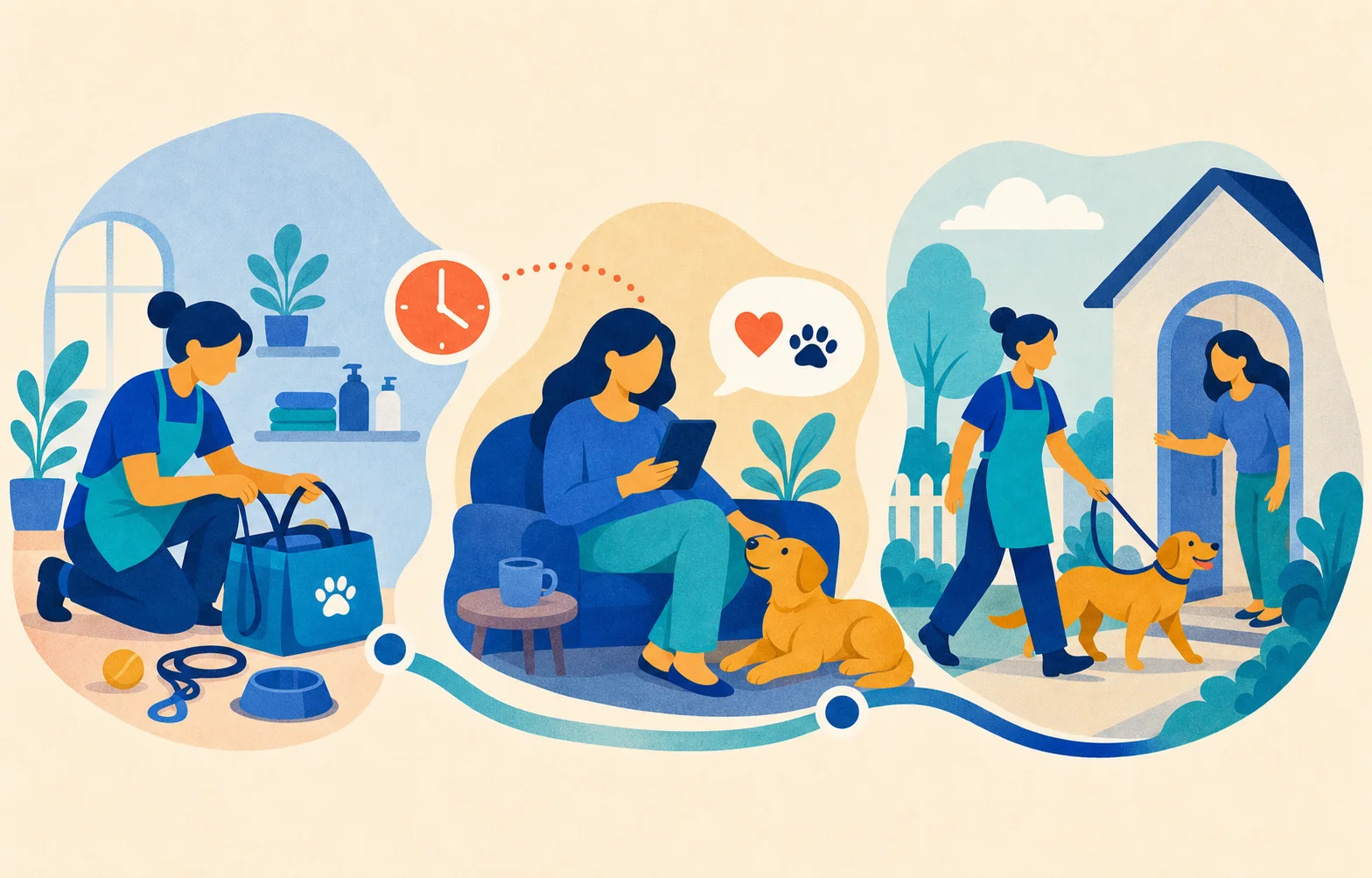
No-shows are usually a communication problem
A no-show is expensive for a small pet business. The slot is gone, the staff time is wasted, and another customer may have been turned away. But most customers do not miss appointments because they want to be difficult. They forget, misunderstand the timing, or assume changing plans at the last minute is easy.
The best approach is to make the booking clear from the start and remind the customer in a way that feels helpful, not aggressive.
Confirm the appointment in plain language
Every confirmed booking should include the pet name, date, time, service, location, and any important notes. For house-call grooming, include the address. For boarding, include check-in and check-out expectations.
Avoid vague messages such as "see you tomorrow". A useful message says exactly what is happening. For example: "Muffin is booked for Full Groom on Friday, 3:00 PM at your home address."
Send reminders at the right time
A reminder sent too early is forgotten. A reminder sent too late may not give the customer time to adjust. A window of 24 to 48 hours before the appointment is a useful starting point, then the business can adjust it around its customers and cancellation policy.
Use one clear reminder channel rather than sending the same message everywhere. An automated email or a prepared WhatsApp reminder can both work well when the message is short, specific, and easy to reply to.
Make rescheduling easy, but not invisible
Customers should know how to reschedule, but changes should still be controlled by the business. For small teams, fully automated rescheduling can create problems if the system does not understand travel time, pet handling needs, or staff availability.
A good middle ground is to let customers request a change, then let the business approve it. This keeps the customer experience smooth without losing control of the schedule.
Track no-shows without making it personal
Track no-shows as a business signal, not as a way to shame customers. If a customer has missed several appointments, the team may choose to collect a deposit, confirm more carefully, or avoid giving peak slots.
The goal is not punishment. The goal is protecting the business, the team, and the customers who do show up.