
What to record after every pet visit
Record the useful details from grooming or boarding so the next visit starts prepared.
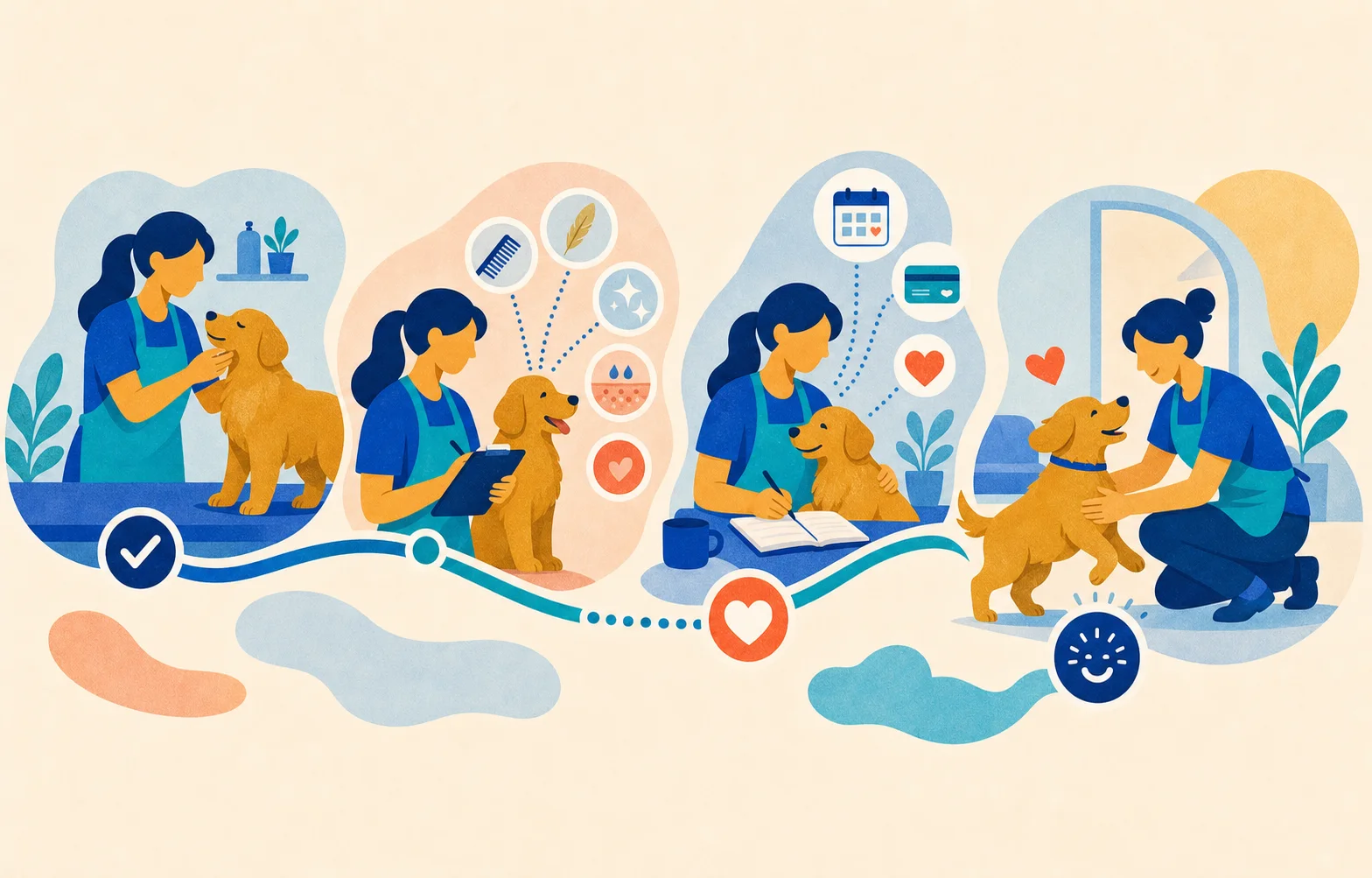
The visit is not finished when the pet goes home
After the pet leaves, there are still a few details worth recording. These notes do not need to be long. The goal is to capture what the team will want to know next time.
Small habits after each visit make the business feel more professional over time. They also reduce confusion when a different staff member handles the next appointment.
Record the final service and price
The booked service may not always match the completed work. A pet may need extra dematting, a bath upgrade, a shorter haircut, or a custom price because of size, coat condition, or age.
Record the final service lines, quantity, price, and discount before generating the invoice. This gives the owner a clearer bill and gives the business cleaner sales records.
Mark payment status clearly
Many small pet businesses collect payment through PayNow, cash, bank transfer, or manual follow-up. That is normal. What matters is that the system clearly shows whether the appointment is paid, unpaid, partially offset by deposit, or fully covered.
Manual payment marking is common and practical. It keeps the payment workflow simple without forcing the business to become a payment platform.
Update pet notes when the pattern matters
If something happened once, appointment notes may be enough. If it is likely to matter again, update the pet profile. Examples include "cannot touch paw", "needs muzzle", "prefers shorter body", "owner likes teddy face", or "gets anxious during drying".
The pet profile should become more useful after each visit. Over time, it becomes a care history that helps the team work faster and more gently.
Use completion and no-show states properly
Completed appointments should be marked completed. Missed appointments should be marked no-show. These states matter because they affect sales reports, customer history, and future decisions.
If the team leaves old appointments in the wrong state, reports become noisy. A clean end-of-day review can prevent that.
Turn notes into better rebooking
The easiest next booking is one that starts from the last successful appointment. If the pet usually repeats the same services, use the previous appointment as a starting point, then adjust what changed.
This saves time, reduces typing, and helps the customer feel remembered without the team needing to rely on memory.